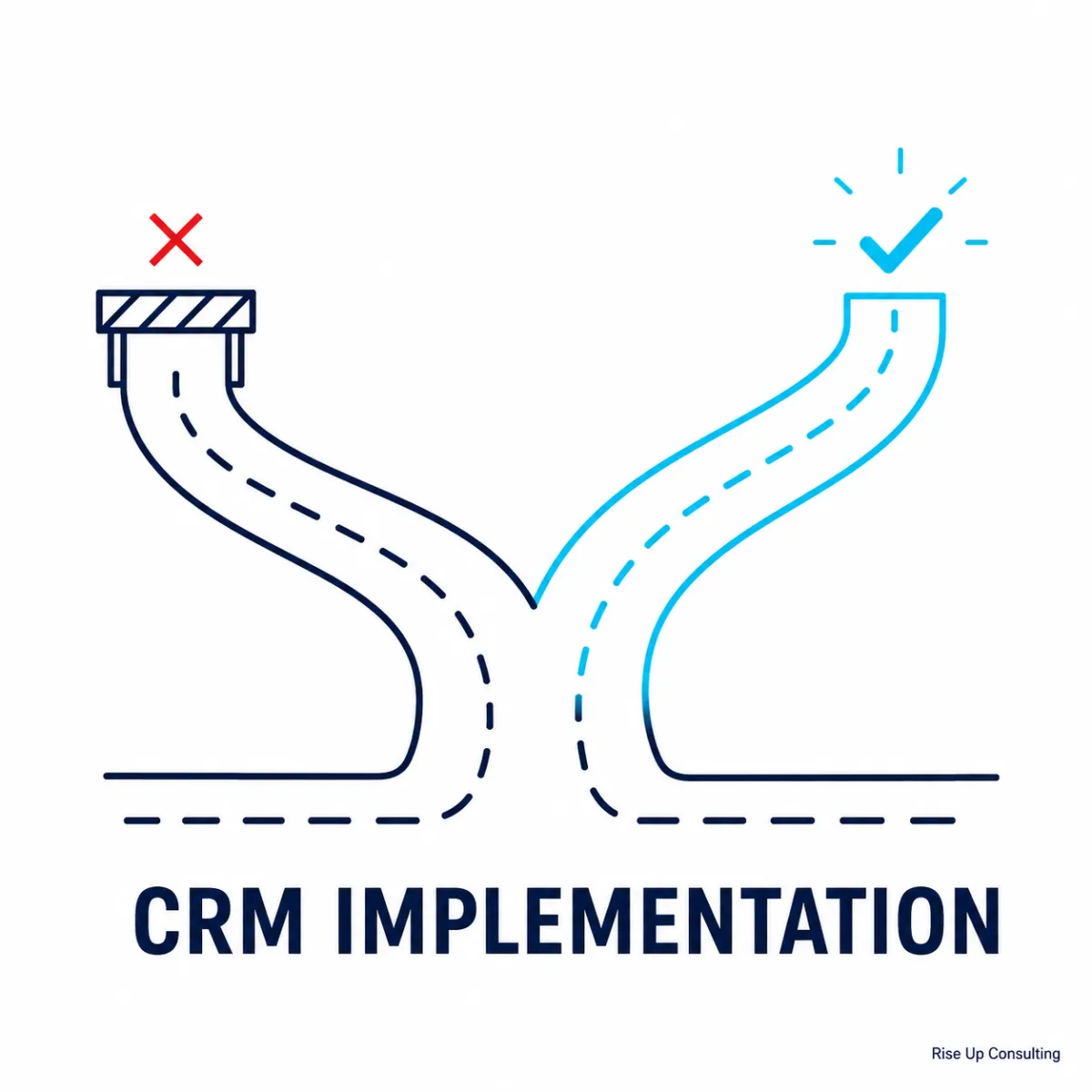
Why CRM Implementations Fail and How to Avoid It
Why CRM Implementations Fail (and How to Avoid It)
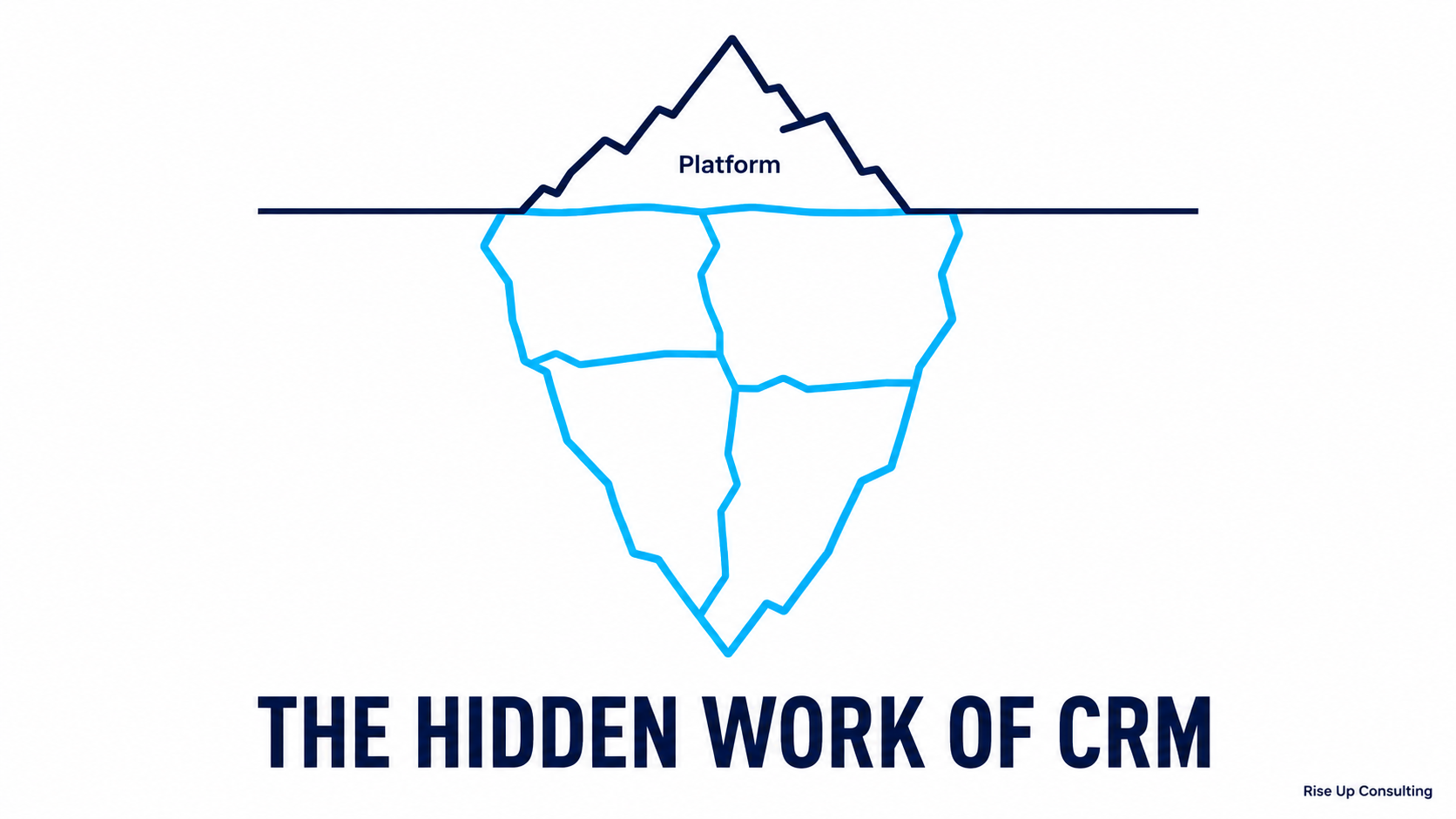
You've made the investment. You've selected the platform, negotiated the contract, and rallied the team. Six months later, your new CRM is sitting largely unused, your sales reps are still working from spreadsheets, and the executive team is quietly questioning whether the whole thing was worth it.
If this sounds familiar, you're not alone. Research consistently shows that CRM failure rates hover between 30% and 70%, depending on how you define failure. That's a striking range for a category of software that's been around for decades and promises to be the backbone of customer relationships. So what keeps going wrong, and more importantly, what can organizations actually do about it?
---
The Real Reasons CRM Implementations Fail
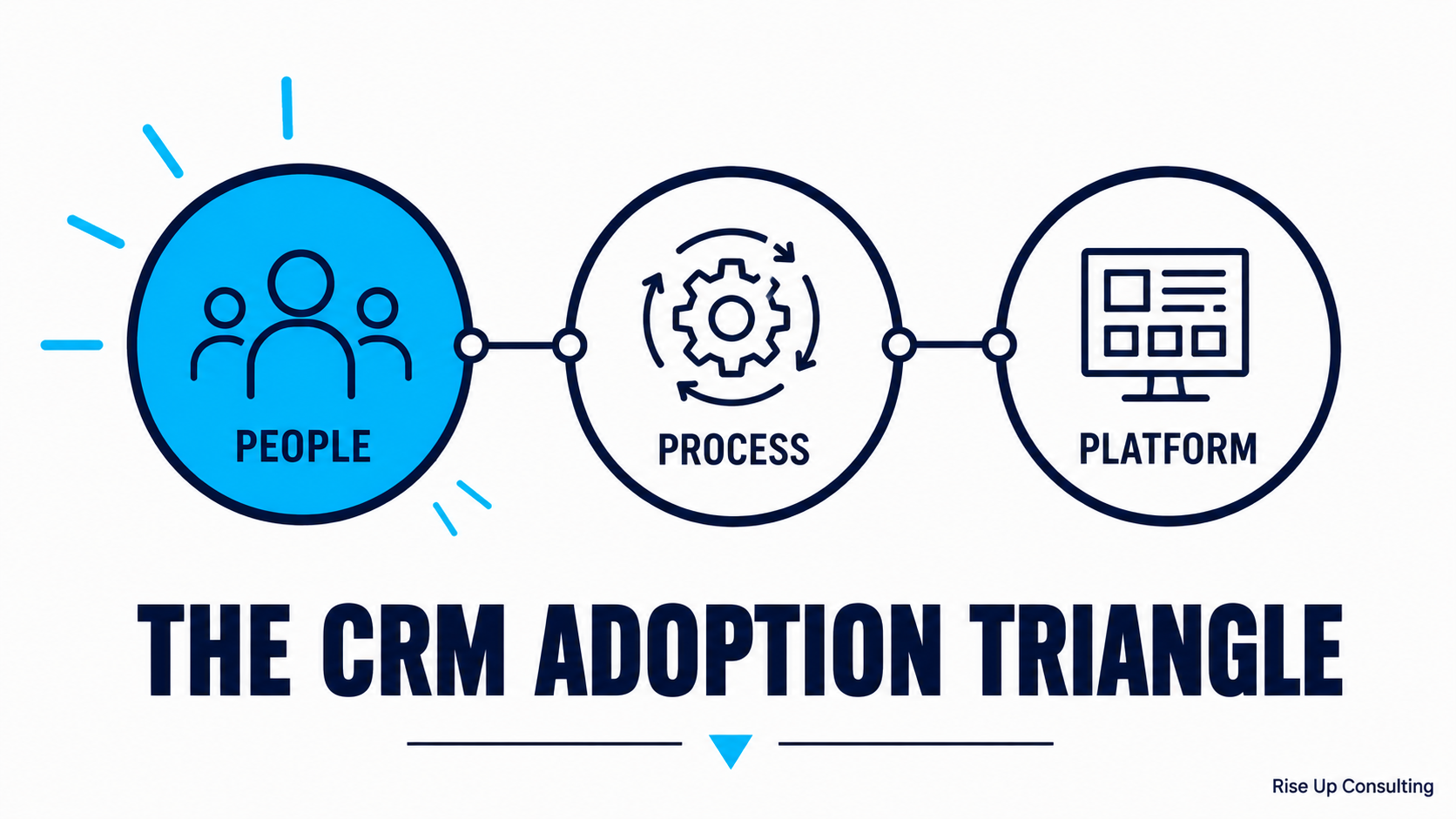
Before we get to solutions, it's worth being honest about the root causes. Most CRM failures aren't technology problems. The platform usually works exactly as advertised. The failure happens in the layers around it, the people, the processes, and the decisions made long before the first user ever logs in.
1. The business bought a tool when it needed a strategy
A CRM is not a strategy. It's infrastructure for a strategy. When companies go to market asking "which CRM should we buy?" before asking "what outcomes are we trying to drive and what processes need to support them?", they almost always end up with an expensive, over-configured system that doesn't match how their teams actually work.
The technology should follow the process, not the other way around. Organizations that skip the process design phase end up bending their workflows to fit the software, which creates friction, workarounds, and eventually, abandonment.
2. No clear executive sponsorship
A CRM implementation touches nearly every customer-facing function in a business. It asks salespeople to change how they log their day. It requires marketing to rethink lead handoffs. It often forces customer service teams to leave behind tools they've used for years. None of this happens without visible, consistent leadership from the top.
When executive sponsors are nominally assigned but not actively involved, not clearing blockers, not reinforcing expected behaviors, not talking about CRM adoption in leadership meetings, the message to the organization is that this project is optional. And people respond accordingly.
3. Adoption was treated as an afterthought
Many implementation plans spend 80% of their effort on configuration and data migration and roughly 20 minutes thinking about how to get people to actually use the system. Change management isn't a soft extra, it's the core work.
Users need to understand not just how to use the CRM, but why it makes their jobs easier. If the only compelling argument is "leadership wants visibility," you've already lost. The adoption case needs to be built from the user's perspective: fewer missed follow-ups, less time digging through email chains, clearer pipeline for comp conversations.
4. Dirty data was imported and left alone
Not sure where your pipeline is leaking?Take the free 2-Minute Pipeline Diagnosticto find out in under two minutes.
One of the fastest ways to kill trust in a new CRM is to migrate years of bad data, duplicate contacts, outdated companies, wrong owners, stale opportunities, and then leave it for users to wade through. People will open the system, find it more confusing than what they had before, and go back to their old habits within weeks.
Data quality isn't glamorous, but it's foundational. A successful CRM implementation treats the data audit and cleanup phase as seriously as any other workstream.
5. The implementation was declared "done" at go-live
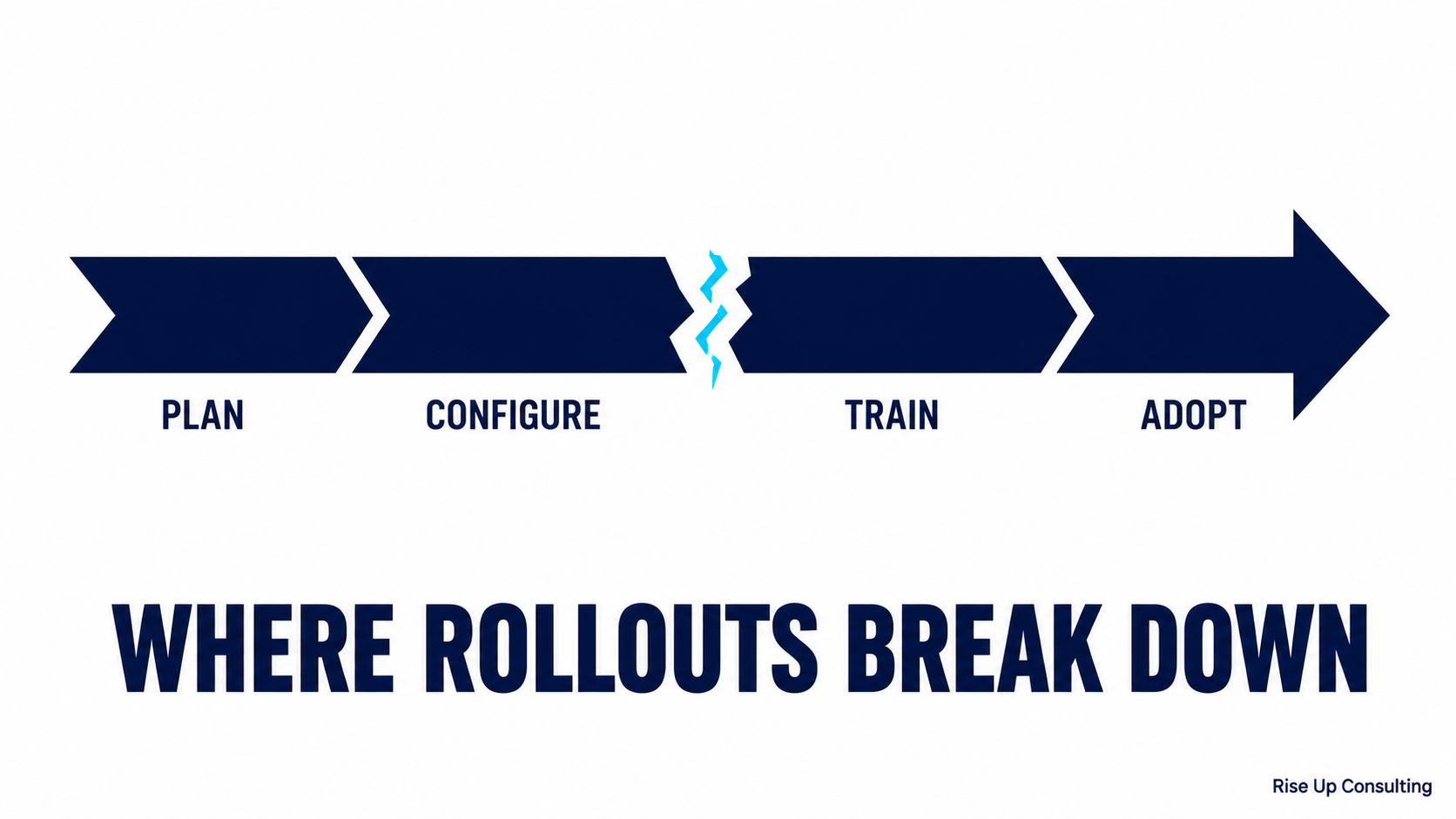
Go-live is the beginning of a CRM's useful life, not the end of the project. Organizations that treat the launch as a finish line instead of a starting point tend to see adoption plateau, frustration build as edge cases emerge, and configuration drift as different teams start making their own modifications without coordination.
The CRM needs ongoing ownership, someone accountable for governance, continuous improvement, and making sure the system evolves as the business does.
---
What Successful Implementations Do Differently
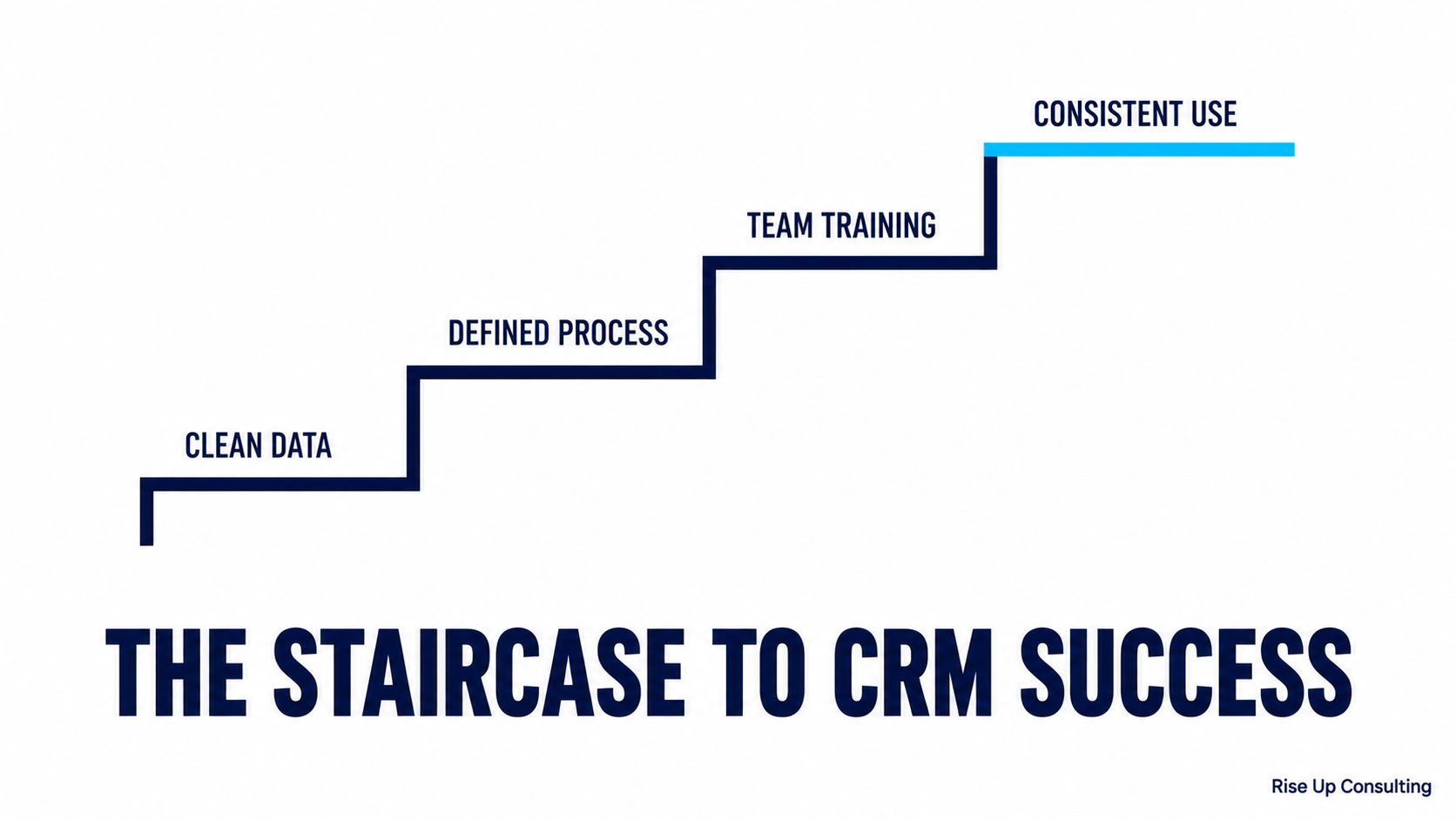
The organizations that get strong ROI from their CRM investments share a few patterns that are consistent enough to be instructive.
Start with the "why" before the "what"
Before selecting a platform or writing a requirements document, successful implementers invest real time in understanding the current state: how deals actually move through the pipeline, where handoffs break down, what data people actually need to do their jobs. This diagnostic work reveals the process gaps the CRM needs to solve, and it makes every subsequent decision sharper.
Define success in measurable terms from the start
"Better visibility" is not a success metric. "Reducing average sales cycle length by 15%" is. "Improving lead follow-up speed" is not. "Ensuring 100% of inbound leads receive a first outreach within four hours, tracked in the CRM" is. Organizations that define specific, measurable outcomes before implementation begins can build toward them intentionally, and they can tell whether they've succeeded.
Involve end users early and often
The people who will use the CRM every day have the clearest view of what will and won't work in practice. Involving them in requirements gathering, workflow design, and UAT (user acceptance testing) doesn't slow the process down, it dramatically reduces the rework and resistance that follows a go-live that surprises people.
Build a champion network: a handful of enthusiastic early adopters across teams who are part of the design process and become peer advocates during rollout. Their credibility with colleagues is different from, and often more effective than, top-down mandates.
Invest in change management proportionally
A rough rule of thumb: for every dollar you spend on technology licensing, plan to invest at least as much in implementation, training, and change management. That ratio surprises some buyers, but it reflects where the real work actually lives. Training shouldn't be a two-hour webinar the week before go-live. It should be role-specific, hands-on, reinforced over time, and tied to workflows people already use.
Clean your data before migration, not after
Run a data audit before you export anything from your old system. Deduplicate contact and account records. Establish ownership rules. Archive records that haven't been touched in years. Set minimum data standards that new records will need to meet going forward. This work is tedious, but users who log into a clean, organized system have a completely different first impression than those who inherit chaos.
Appoint a long-term CRM owner
Someone in the organization, not the consultant, not the software vendor, needs to own the CRM after implementation. This person is responsible for user questions, governance decisions, configuration changes, reporting, and making sure the system evolves with the business. In smaller organizations this might be a partial role; in larger ones it might be a full-time administrator or a RevOps function. Either way, the accountability needs to be explicit.
---
A Note on Platform Selection
Organizations often spend a disproportionate amount of energy debating which CRM to buy and not nearly enough on implementation approach. The honest truth is that Salesforce, HubSpot, Pipedrive, Microsoft Dynamics, and most other major platforms are capable of supporting a successful implementation for the right organization. The platform matters, there are real differences in capability, flexibility, and total cost, but it's rarely the deciding variable in whether an implementation succeeds or fails.
Choose the platform that fits your team's technical maturity, your budget, your integration requirements, and the complexity of your sales process. Then put the rest of your energy into implementation excellence.
---
The Bottom Line
CRM implementations fail for predictable, preventable reasons. They fail when organizations treat them as technology projects instead of business transformation initiatives. They fail when adoption is an afterthought, when data is neglected, and when the project is considered finished at go-live.
The organizations that succeed approach implementation as a sustained investment in how they work, not a one-time deployment. They align on strategy before selecting software. They build for the user, not just for the executive dashboard. They stay engaged long after the ribbon-cutting.
Getting there takes more upfront intentionality than most implementations receive. But the alternative, a system your team doesn't trust, doesn't use, and doesn't benefit from, is far more expensive in the long run.
---
At Rise Up Consulting, we help growing organizations design and implement CRM strategies that actually stick. If your current implementation isn't delivering the results you expected, or you're planning a new one and want to get it right from the start, let's talk.
---
Ready to see exactly where your revenue system is leaking? Get a free revenue audit with our team, completely free, no pitch.