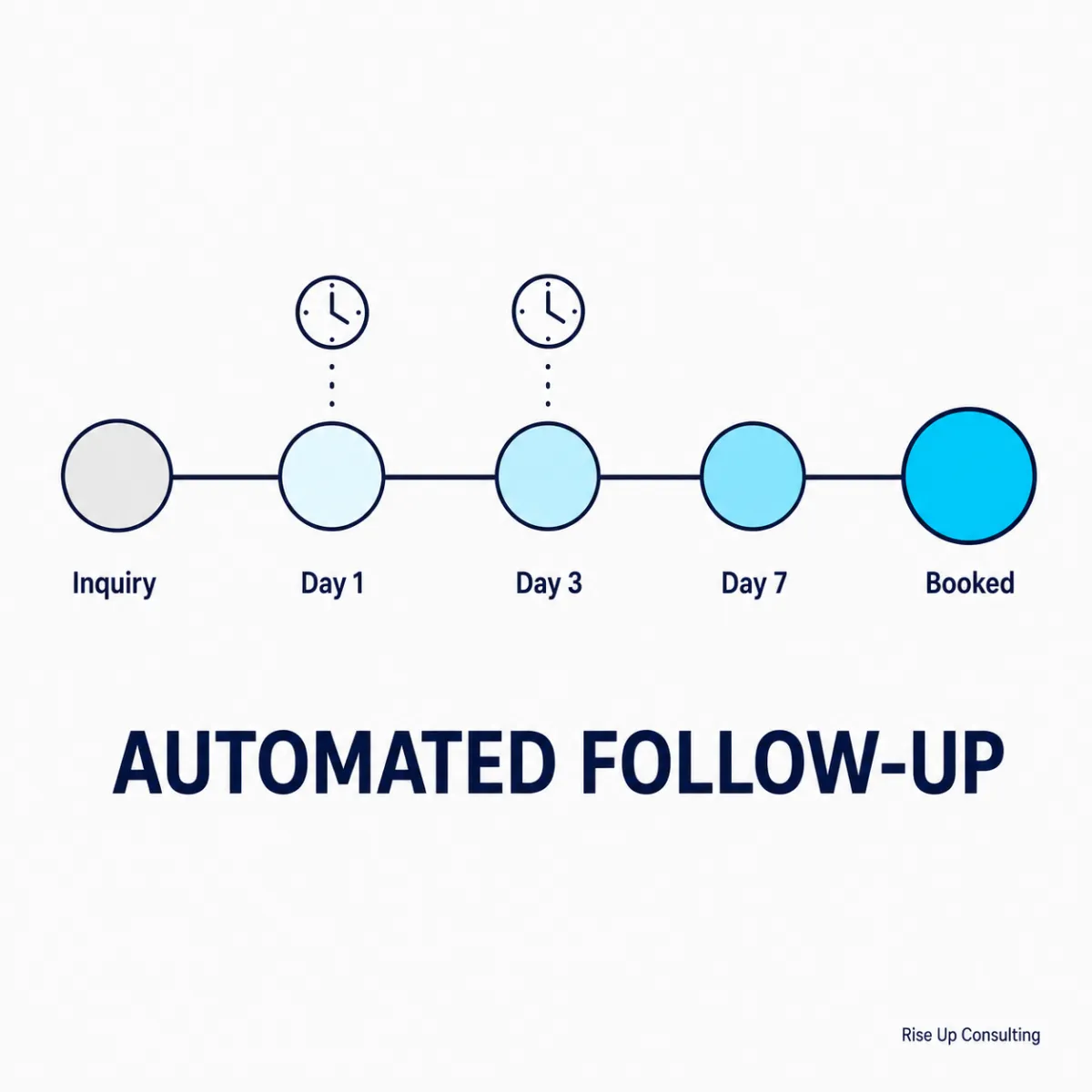
Automated Follow-Up Sequence for Service Business Leads
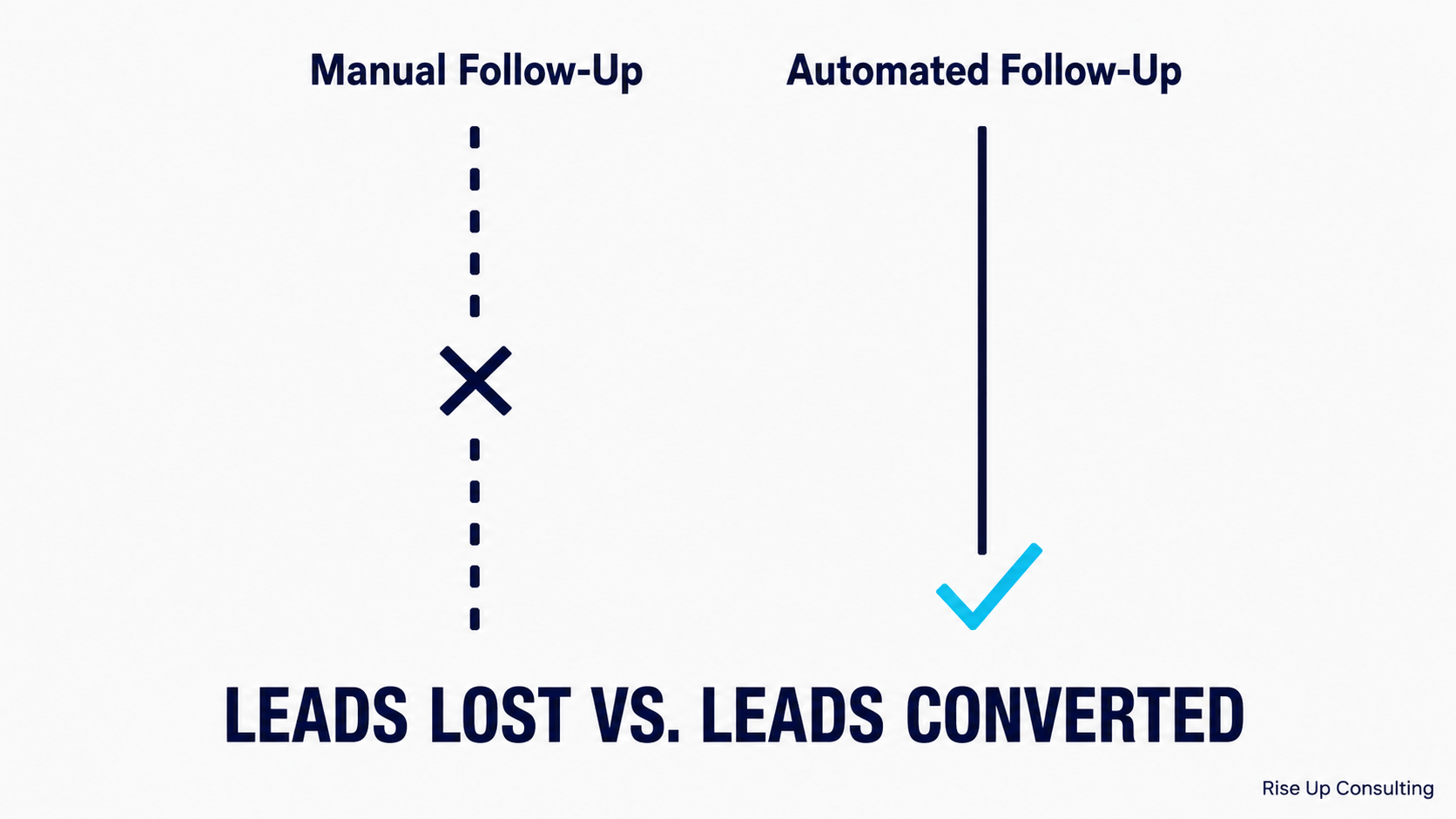
If you've ever watched a hot lead go cold simply because life got in the way, you already understand the problem. A potential client reaches out, you have a great conversation, and then the follow-up slips through the cracks. Three weeks later, they've hired someone else, not because your competitor was better, but because they followed up first.
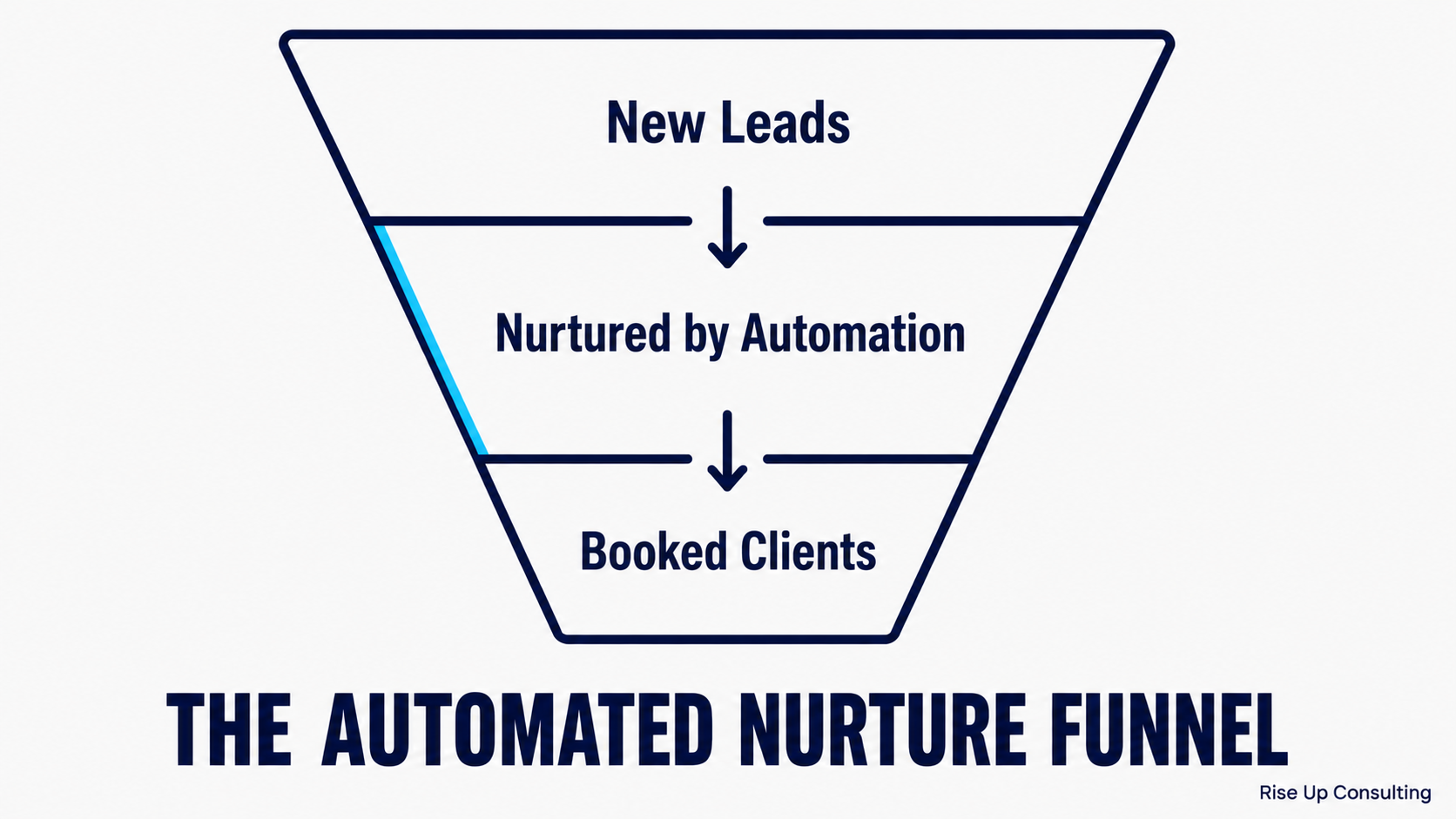
For service businesses, consistent follow-up is often the single biggest gap between the revenue you're earning and the revenue you could be earning. The good news is that automation makes it entirely possible to follow up with every lead, every time, without adding more to your plate.
Here's exactly how to build a follow-up sequence that works while you sleep.
--
---
Why Most Service Businesses Lose Leads in the Follow-Up Stage
Before we get into the mechanics, it's worth understanding why this keeps happening even to talented, well-intentioned business owners.
The core issue is that manual follow-up depends on memory and bandwidth, two things that are always in short supply when you're busy delivering great work for existing clients. Research from the National Sales Executive Association has consistently shown that most sales require five or more follow-up touchpoints, yet the majority of salespeople give up after one or two attempts. Service business owners, who are also the ones doing the actual client work, tend to give up even sooner.
Automation doesn't replace the warmth and personalization that close deals. It ensures you actually show up consistently so that warmth has a chance to land.
---
Step 1: Map Your Lead Journey Before You Build Anything
The biggest mistake people make is jumping straight into an automation tool without first understanding what they want that automation to do. Spend time mapping the journey a lead takes from their first contact with your business to the moment they sign a contract.
Ask yourself: Where do leads come from? What's their first point of contact, a website form, a social media DM, a referral email, a phone call? What information do you need from them before you can send a meaningful proposal? What objections do they typically raise, and at what point in the conversation do those objections come up?
Answering these questions gives you the skeleton of your sequence. A sequence for a marketing consultant who gets most of her leads from a discovery call booking page will look very different from one built for a landscaping company that gets inquiries through a contact form.
---
Step 2: Define the Stages of Your Sequence
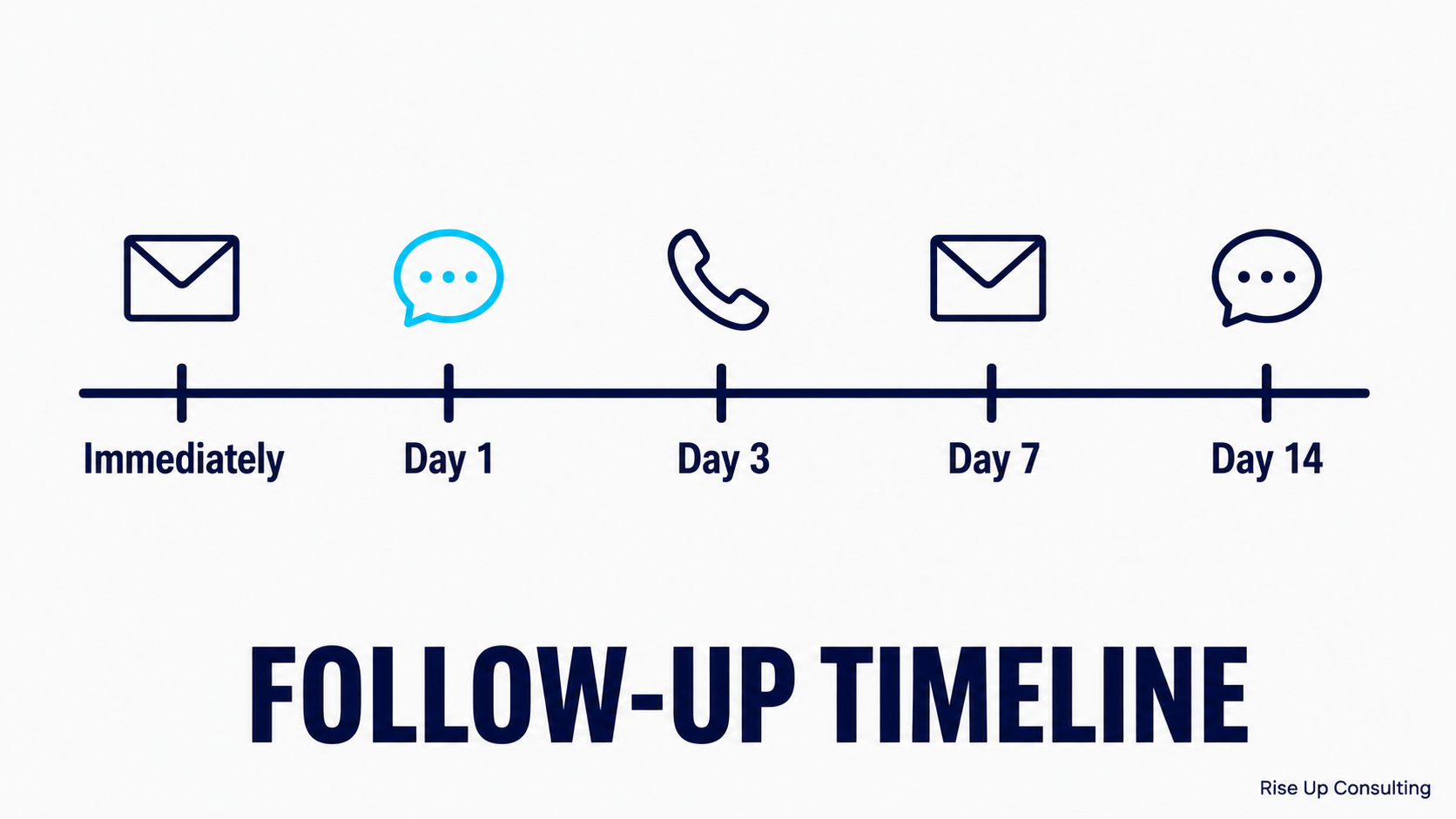
A solid automated follow-up sequence for a service business typically has four distinct stages.
Not sure where your pipeline is leaking?Take the free 2-Minute Pipeline Diagnosticto find out in under two minutes.
Stage 1, Immediate acknowledgment (within 5 minutes of inquiry):This first touchpoint confirms receipt of their inquiry, sets expectations for next steps, and begins establishing trust. Speed matters enormously here; studies consistently show that leads are exponentially more likely to convert when they hear back within the first five minutes compared to five hours. Even an automated response dramatically outperforms silence.
Stage 2, Nurture and education (days 1 through 7):These messages do the heavy lifting of demonstrating your expertise and building confidence before a sales conversation happens. Think case studies, short testimonials, answers to common questions, or a quick video walking through your process. The goal is to warm a prospect up so that by the time you talk, they're already half-sold.
Stage 3, Re-engagement (days 8 through 21):This is where most manual follow-up falls apart. A week passes, the lead feels stale, and you don't want to seem desperate. But the truth is that most people are simply busy. A well-timed, non-pushy message at the two-week mark often reactivates leads who genuinely wanted to move forward but got distracted. Make it easy for them to re-engage with a simple question or a clear call to action.
Stage 4, Long-term nurture (monthly, ongoing):Not every lead is ready to buy right now. Some of your best future clients are people who weren't ready six months ago. A consistent monthly touchpoint, a useful tip, a relevant article, a genuine check-in, keeps you top of mind without being intrusive. When they're ready, you'll be the first person they think of.
---
Step 3: Write the Actual Messages
This is where service business owners often get stuck, so let's make it concrete. Each message in your sequence should follow a simple formula: acknowledge where they are, deliver something of value, and give them one clear next step.
Avoid messages that are purely about you. "Just checking in to see if you're ready to move forward" is low-value and forgettable. Instead, try: "A lot of the clients I work with come to me worried about X, here's a quick way to think through that before we talk." You've acknowledged a real concern, given them something useful, and made the next conversation feel worthwhile.
Keep your tone conversational and avoid sounding like a mass email. Even in automated sequences, first-name personalization and references to how they originally connected with you go a long way. Most email automation tools make this straightforward with basic merge fields.
---
Step 4: Choose the Right Tools for Your Business
You don't need the most sophisticated tech stack to run an effective follow-up sequence. What you need is a tool that integrates with how leads come in and lets you trigger sequences based on actions or timing.
For small to mid-size service businesses, platforms like ActiveCampaign, HubSpot (free tier works well to start), Mailchimp, or ConvertKit all allow you to build automated email sequences triggered by form submissions or tags. If you rely heavily on text-based communication, tools like Keap or GoHighLevel add SMS capabilities alongside email. If your business books through a scheduling tool like Calendly or Acuity, both integrate with most major CRMs so that a booked call can automatically trigger one sequence and a no-show can trigger another.
The right tool is ultimately the one you'll actually use consistently. Start simple.
---
Step 5: Set Up Triggers and Exit Conditions
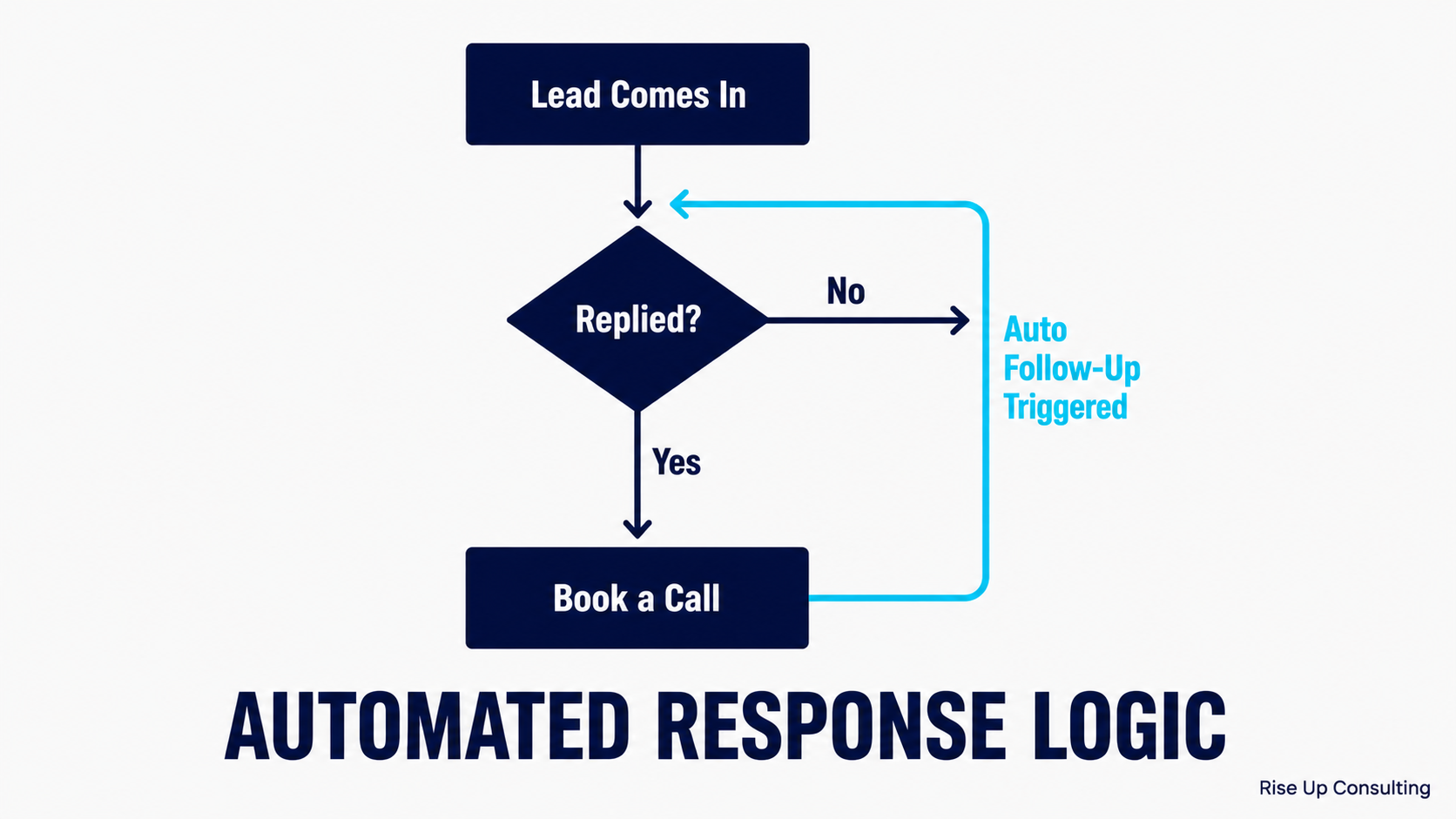
An automated sequence without proper triggers and exit conditions is a liability. You do not want to send a "just following up, haven't heard from you!" email to a client who signed a contract yesterday.
Every sequence needs a clear trigger (what starts it) and clear exit conditions (what stops it). Common exit conditions include booking a call, replying to any email in the sequence, clicking a link to your proposal, or being manually tagged as a client. Most automation platforms handle this through tagging logic, when a lead becomes a client, a tag is applied and the nurture sequence stops automatically.
Take the time to test your sequences by running yourself through them as a fake lead before you go live. It's much better to catch a broken link or a mis-timed message in testing than after it's gone to a real prospect.
---
Step 6: Review, Measure, and Improve
Your first sequence won't be your best one, and that's fine. What matters is that you build in a regular habit of reviewing performance. The key metrics to track for any follow-up sequence are open rate (are your subject lines working?), click rate (is your content compelling enough to drive action?), reply rate (are people engaging?), and conversion rate from lead to booked call or signed proposal.
Plan to review your sequence metrics at least once a quarter. If you notice a significant drop-off at a particular message, rewrite it. If one message has a much higher reply rate than the others, study what it's doing well and apply that logic elsewhere. Over time, your sequence becomes a genuinely refined sales asset rather than just a set-it-and-forget-it tool.
---
A Quick Note on Balancing Automation with Genuine Connection
Automation should handle the consistency; your personality and judgment should still show up in the content. The best follow-up sequences feel personal even when they're automated because the human who wrote them took the time to be specific, warm, and genuinely useful.
There are also moments where a real-time, personal response will always outperform an automated one, like when a lead replies with a specific question, shares a meaningful detail about their situation, or shows signs they're close to making a decision. Treat automation as the system that keeps leads warm and engaged, and treat your direct attention as the resource you deploy at the moments it matters most.
---
The Bottom Line
Building an automated follow-up sequence isn't about removing the human element from your sales process. It's about making sure that every person who expresses interest in working with you hears from you consistently, receives real value along the way, and gets a genuine opportunity to become a client, even when you're fully booked, traveling, or simply having a normal human week.
Map your lead journey, write messages that actually help, choose a tool that fits your workflow, and set it up to run reliably in the background. Then review and improve it over time.
The leads are already out there. A solid automated sequence is what turns more of them into clients.
---
Ready to see exactly where your revenue system is leaking? Get a free revenue audit with our team, completely free.